In-Stock Packaging Inventory for Production Flexibility
What Is In-Stock, Ready-to-Ship Packaging Inventory?
For many growing brands, packaging procurement is one of the least flexible parts of the production process. Bottles, jars, caps and pumps are often ordered weeks or months in advance, which means production timelines are tied to forecasting rather than actual demand.
When packaging isn't available on demand, even small shifts in sales velocity can create friction in manufacturing, delay launches or limit a brand's ability to respond to new opportunities.
In-stock, ready to ship packaging changes that equation. Instead of planning entirely around manufacturing lead times, brands can draw from packaging that is already available and move faster when timing matters most.
Why Packaging Lead Times Can Create Production Constraints
Packaging procurement is often built around manufacturing lead times, which can range from several weeks to several months depending on the component and customization required. While this model is common across the industry, it introduces a level of dependency that can be difficult for growing brands to absorb.
When packaging is ordered far in advance of production needs, companies are effectively making decisions based on forecasts rather than confirmed demand. If those forecasts shift, even slightly, it can create a chain reaction across production schedules, inventory planning and fulfillment timelines.
Long lead times can limit flexibility at key moments. A product may gain unexpected traction through retail placement, ecommerce performance, or a marketing campaign, but without available packaging, scaling production quickly becomes difficult.
This can also impact launch timing. Brands may have finished formulas or products ready to go, but still be waiting on packaging components before they can move into full production or distribution. In those cases, packaging becomes the constraint rather than the product itself.
Over time, this creates a structural challenge: the faster a brand grows or responds to demand, the more pressure is placed on a system that was designed for slower, more predictable cycles.
How In-Stock Packaging Keeps Production Moving
When packaging components are already in stock and ready to ship, production planning becomes significantly more adaptable. Instead of aligning manufacturing schedules around supplier lead times, teams can move forward based on actual demand and internal readiness.
This shift is especially important for brands managing multiple SKUs or frequent product replenishment cycles. When a particular bottle, pump or closure is needed, having immediate access to those components helps keep filling lines active and reduces idle time in production.
In-stock packaging also supports more responsive decision-making. If demand increases unexpectedly, teams can replenish key components without waiting for a new production run to be completed. This allows production to continue moving while maintaining alignment with real-time sales performance.
For growing brands, this flexibility can help smooth out the gaps between forecasting and execution. Instead of building long buffers of inventory "just in case," companies can rely on available stock to keep operations moving at a steadier pace.
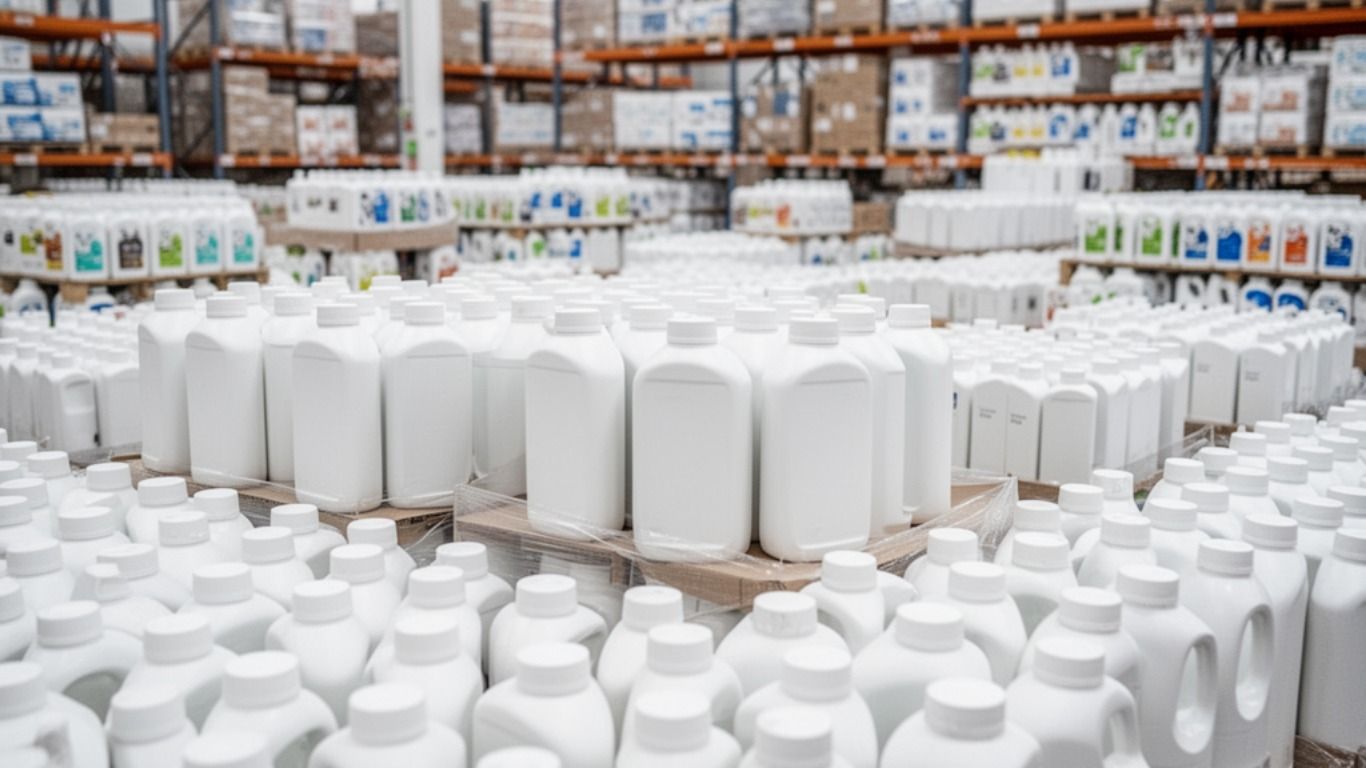
At McKernan Packaging Clearing House, in-stock inventory is maintained specifically to support this type of responsiveness, with a wide-range of packaging components available for fast shipment from multiple warehouse locations.
How Brands Respond to Demand Spikes With In-Stock Inventory
Demand for packaged products can shift quickly based on retail promotions, ecommerce performance, seasonal cycles and marketing activity. In many cases, a single campaign or placement can significantly increase order volume in a short period of time.
When that happens, a brand's ability to scale production is often directly tied to packaging availability.
If critical components such as bottles, jars, pumps, sprayers or closures are not immediately accessible, production may need to slow or pause while waiting for additional inventory. Even short delays can create challenges in fulfilling retail orders, maintaining ecommerce shipping timelines or meeting distributor reorders.
In-stock packaging helps reduce this friction by allowing brands to replenish key components without waiting on extended manufacturing cycles. Instead of treating demand increases as long-range planning events, teams can respond more closely in line with real-time sales performance.
This is especially relevant for brands operating with active product launch calendars, promotional schedules or fluctuating order volumes, where timing directly impacts fulfillment and revenue capture.
With ready-to-ship packaging inventory, production can continue moving while demand is being met, rather than being constrained by packaging availability.
Lower Minimums and Reduced Overstock
One of the challenges in packaging procurement is balancing order quantity with actual demand. Traditional manufacturing models often require larger minimum order quantities, which can lead to excess inventory, increased storage needs and capital tied up in packaging that may not be used immediately.
In-stock packaging inventory offers a different approach. Because components are already produced and available, brands can order in quantities that better match current production needs rather than committing to large forecast-driven purchases.
This flexibility is particularly useful for product testing, seasonal launches or early-stage growth, where demand is still being validated. Instead of over-ordering packaging to meet minimum requirements, companies can start smaller and scale purchases as demand becomes more predictable.
Lower minimums also help reduce the risk of overstock waste. When packaging is ordered in quantities aligned more closely with real usage, businesses can avoid holding excess inventory that takes up warehouse space or ties up working capital.
Over time, this creates a more responsive procurement model. Brands can adjust packaging decisions based on performance rather than upfront volume commitments, allowing for more efficient use of resources as they scale.
Why Growing Brands Benefit Most
As brands grow, packaging procurement becomes more complex. Higher order volumes, expanding product lines and additional sales channels all place greater pressure on planning, forecasting and inventory management.
In the early stages of a business, smaller production runs and simpler SKU structures can make long lead times and bulk ordering more manageable. However, as demand increases, those same processes can become less flexible and more difficult to scale efficiently.
Growing brands often need to balance multiple priorities at once: launching new products, maintaining existing inventory levels and responding to shifts in customer demand. When packaging is tied to extended production timelines or large minimum order commitments, it can limit the ability to adjust quickly across these areas.
In-stock, ready-to-ship packaging helps reduce that constraint. By providing access to components that are already available, brands can move more fluidly between testing, scaling and replenishing products without restructuring their entire procurement process.
This flexibility becomes increasingly valuable as complexity increases. Instead of building additional layers of forecasting and long-range planning around packaging availability, teams can rely on accessible inventory to support ongoing growth.

Reliable Inventory for Modern Packaging Operations
For many growing brands, packaging is no longer just a procurement step in the production process. It has become a key factor in how quickly companies can respond to demand, scale product lines and maintain consistent fulfillment.
As lead times increase complexity and forecasting becomes more difficult, access to in-stock, ready-to-ship packaging provides a practical alternative to rigid ordering cycles. It allows brands to operate with greater flexibility, adjust to real-time demand and keep production moving without unnecessary delays.
Instead of building long planning horizons around packaging availability, companies can rely on inventory that is already in place and ready to move when needed. This creates a more responsive approach to production and helps reduce friction across supply chain planning.
McKernan Packaging Clearing House supports this model with a broad range of in-stock packaging components available for fast shipment. With millions of items across bottles, jars, caps, pumps and closures, brands can source what they need without waiting for extended manufacturing timelines.
For teams managing growth, product launches or fluctuating demand, ready-to-ship packaging inventory offers a more adaptable way to keep operations moving.